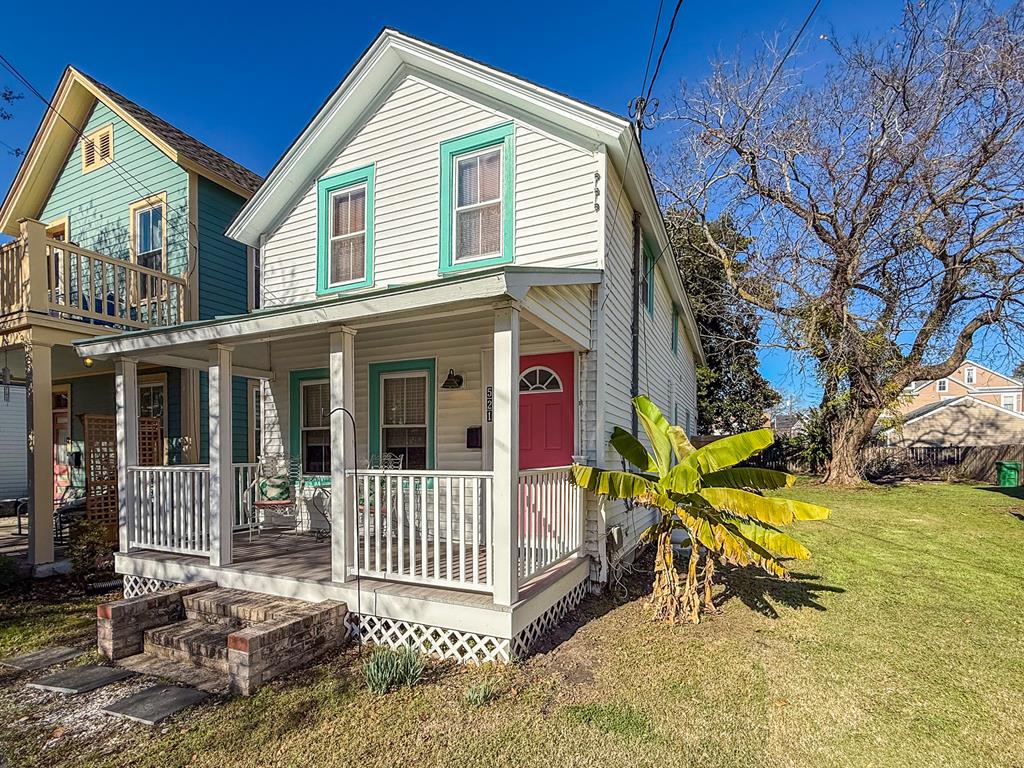
Cape Charles has quietly become one of the most appealing short-term rental markets on the Mid-Atlantic coast. Victorian homes a short walk from the beach, a walkable downtown, championship golf, and a steady stream of visitors from Richmond, DC, and Hampton Roads—it checks a lot of boxes for investors looking for a vacation rental property with real earning potential.
But before you make an offer on a property with STR income in mind, there’s something important to know: the rules changed significantly in late 2024, and buying without understanding them first can be a costly mistake.
Here’s what you need to know.
The Big Change: STRs Now Require a Conditional Use Permit
Prior to November 2024, short-term rentals in Cape Charles were a by-right use—meaning if you bought a property in the right zone, you could operate a rental without needing special approval from the town. That changed when the Town Council approved a new STR Zoning Ordinance on November 21, 2024.
Under the new ordinance, all new short-term rentals require a Conditional Use Permit (CUP). That means a formal application, a public hearing, neighbor notification, and approval by the Town Council before you can legally operate. It’s not a rubber stamp—it’s a discretionary process, and approval is not guaranteed.
This is the single most important thing for investors to understand about the current Cape Charles STR landscape. Buying a property and assuming you can run a rental without a CUP is no longer how it works.
Permits, Licenses, and Registrations
Operating a legal STR in Cape Charles involves several layers of compliance beyond the CUP:
Town of Cape Charles Registration — Annual registration with the town is required, along with annual renewal and compliance verification.
Northampton County Business License—All STR operators need a business license filed with the Northampton County Commissioner of Revenue, renewed annually.
Safety Inspections — STRs are subject to initial and annual inspections covering fire safety equipment, building code compliance, health and safety standards, and maximum occupancy verification.
Occupancy Over 10 Guests — If your property in the Historic District has occupancy above 10, an additional permit (BOSTR Permit) is required. This permit primarily addresses off-street parking capacity for guests.
ADU Note — If the property has a legal Accessory Dwelling Unit, only one structure—either the primary dwelling or the ADU—can hold an STR Zoning Permit in a given calendar year. Both cannot operate as STRs simultaneously.
Taxes You’re Responsible For
STR operators in Cape Charles are responsible for collecting and remitting several taxes. Platforms like Airbnb and VRBO handle some of this automatically, but you’re ultimately responsible for ensuring it’s done correctly:
- Virginia Sales Tax: 5.3% of gross rental receipts (4.3% state + 1% local)
- Transient Occupancy Tax (TOT): Due to both the Town of Cape Charles and Northampton County
As of early 2026, TOT reporting has shifted from monthly to quarterly. Reporting opens at the end of each quarter and the window lasts 20 days — late filings are assessed penalties. This is mandatory even if your booking platform remits on your behalf; you still need to be registered and tracking compliance.
Which Neighborhoods Tend to Perform Best for STRs?
Not all Cape Charles neighborhoods are equal when it comes to short-term rental performance. Proximity to the beach, downtown walkability, and the ability to attract the type of guest who drives the highest nightly rates all factor in.
Properties closest to the beach and the Historic District’s walkable core tend to perform strongestguests booking a Cape Charles weekend want to be close to the action. Mason Avenue and the surrounding blocks offer that combination of beach proximity and downtown access that short-term renters are looking for.
Bay Creek properties can perform well for a different guest profile—golf-focused travelers, groups with access to the resort amenities—but it’s worth checking Bay Creek’s HOA guidelines carefully, as restrictions on rental activity can vary by neighborhood within the community.
Properties on the outskirts of town or in more rural areas can still generate income but typically at lower nightly rates and with more seasonal concentration.
What to Do Before You Make an Offer
If you’re buying specifically for STR income, here’s the due diligence checklist that matters:
Confirm the property’s current STR status.
Check the zoning. Confirm the property is in a zone where a CUP application would even be considered. Your agent should be able to help you verify this with the town’s planning department.
Review any HOA documents. If the property is in Bay Creek or another community with an HOA, read the rental restrictions before assuming you can operate freely.
Get an insurance quote early. STR properties require different coverage than a standard homeowners policy—get a quote specific to short-term rental use before you close.
Talk to the town. The Cape Charles planning and zoning office is the authoritative source on where the CUP process stands and what to expect. It’s a small town with approachable staff—a phone call before you’re under contract can save you a lot of uncertainty.
The Bottom Line
Cape Charles is still a compelling market for short-term rental investment. The demand is real, the visitor profile is strong, and the town’s charm isn’t going anywhere. But the regulatory environment has gotten more structured, and buyers who go in without understanding the CUP requirement—or who assume a property has STR approval when it doesn’t—can find themselves in a difficult position after closing.
The investors who do well here are the ones who do their homework, work with agents who know the local rules, and factor the permitting process into their timeline from day one.
If you’re evaluating Cape Charles properties for STR investment, our team at Chesapeake Properties knows this market and the current regulatory landscape well. We’re happy to help you understand what a specific property’s STR eligibility looks like before you get too far into the process.
Browse Cape Charles listings or contact our team to get started.
For more on buying in Cape Charles, check out our complete home buyer’s guide and our guide to short-term rental investment on the Eastern Shore.