Accessory dwelling units (ADUs) can be an attractive option for homeowners who want flexibility—whether that means housing family members, creating long-term rental space, or planning for future needs. But ADUs in Cape Charles are not automatically allowed, and approval depends on zoning, property characteristics, and how the unit will be used.
This guide explains what ADUs are, when they may be permitted in Cape Charles, and what buyers and homeowners need to understand before moving forward.
What Is Considered an ADU in Cape Charles?
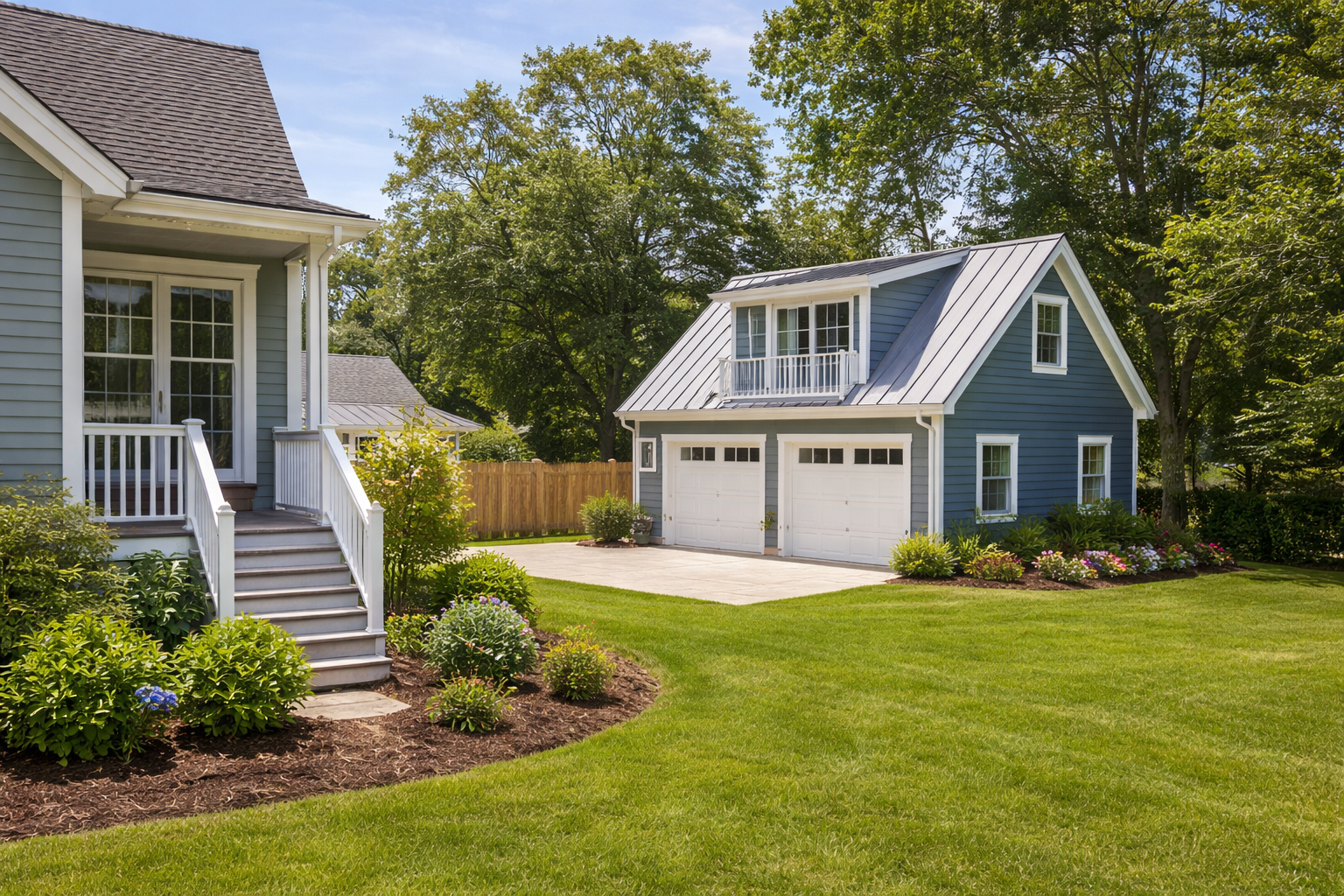
An accessory dwelling unit is a secondary residential space located on the same lot as a primary home. ADUs can take several forms, including garage apartments, carriage houses, or detached guest cottages.
In Cape Charles, how the town classifies an ADU matters more than how homeowners describe it. The unit’s size, layout, utilities, and intended use all factor into whether it qualifies as an accessory structure, a dwelling unit, or something else under town code.
Are ADUs Allowed in Cape Charles?
ADUs are not permitted by right in all zoning districts in Cape Charles. Whether an ADU is allowed depends on several factors, including the property’s zoning designation, lot size, and existing structures.
Some properties may allow an accessory structure that includes living space, while others may restrict secondary dwellings altogether. In historic or planned areas, additional design and use standards may apply.
Because zoning varies within town limits, there is no one-size-fits-all answer. Each property must be evaluated individually.
How ADU Use Affects Approval
One of the most important distinctions in Cape Charles is how the ADU will be used.
An ADU intended for family members or long-term occupancy may be evaluated differently than one intended for rental use. The town clearly separates residential use from commercial short-term rental activity, and approval for one does not guarantee approval for the other.
Homeowners should be cautious about assuming an ADU can automatically function as an income-producing rental.
Short-Term Rental Rules and ADUs
Short-term rental (STR) regulations in Cape Charles are strictly enforced and apply regardless of whether the unit is a primary residence or an ADU.
Current town regulations require STRs to obtain a zoning permit, business license, and annual inspections. Occupancy limits apply per dwelling, and multiple short-term rentals operating simultaneously on the same property are restricted under town codes.
Importantly, an ADU that is otherwise allowed on a property may still be ineligible for short-term rental use, depending on zoning and occupancy rules. December 2024 amendments clarified inspection and compliance standards and reaffirmed that all STR occupancy limits must align with the Virginia Uniform Statewide Building Code.
Utilities, Parking, and Lot Constraints
Even when zoning allows an ADU, infrastructure can become the limiting factor.
Many properties must demonstrate adequate water, sewer, and electrical capacity before approval. Parking requirements, lot coverage limits, and setback rules also apply and can restrict where an ADU can be placed—or whether it can be approved at all.
These practical constraints often matter more than the size of the unit itself.
Common ADU Assumptions That Cause Problems
Buyers and homeowners frequently assume that:
- Any backyard can accommodate an ADU
- ADUs are always allowed if they’re small
- An ADU automatically qualifies as a rental unit
In Cape Charles, these assumptions often lead to delays, redesigns, or outright denials. Most issues stem from skipping zoning review before purchase or construction planning.
How to Evaluate ADU Potential Before You Buy
The safest approach is to evaluate ADU feasibility before purchasing a property or starting design work. This includes confirming zoning, understanding permitted uses, reviewing utility capacity, and accounting for STR regulations if rental use is being considered.
Local expertise matters here. Cape Charles regulations are detailed, actively enforced, and shaped by neighborhood context.
Is an ADU the Right Fit in Cape Charles?
ADUs can work in Cape Charles, but only when zoning, use, and infrastructure align. They are best suited for homeowners who prioritize long-term flexibility over short-term rental income and who are willing to navigate a careful approval process.
Understanding the rules upfront helps set realistic expectations—and avoids costly missteps later.