If you’ve been researching Cape Charles for any length of time, you’ve probably noticed it showing up in places you didn’t expect. Travel publications, lifestyle magazines, real estate roundups, and coastal living guides keep putting this small Virginia town on lists alongside destinations that have been household names for decades. For a town of roughly 1,000 year-round residents at the end of a peninsula on the Eastern Shore of Virginia, that’s a remarkable amount of national attention.
It’s not an accident, and it’s not hype. There are specific, structural reasons Cape Charles keeps earning this recognition, and understanding them helps explain not just why people visit, but why so many of them come back to buy.
The Architecture Is Genuinely Rare
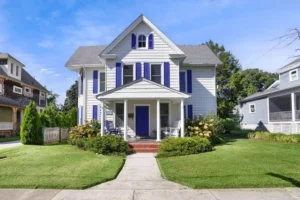
Cape Charles was founded in 1884 as a railroad terminus, and the timing of its development left it with one of the most intact collections of late Victorian and Colonial Revival architecture on the East Coast. The town was built quickly and deliberately, which means the historic district has a cohesion and completeness that most American small towns simply don’t have.
What makes it remarkable is what didn’t happen. Cape Charles missed the waves of mid-century development that reshaped so many comparable towns. The railroad declined, the economy quieted, and the town was largely left alone for several decades. That period of economic quiet is what preserved the architecture. The Victorian homes, the wide tree-lined streets, the town layout, and the scale of the built environment all survived largely intact.
When the town began its revitalization in the early 2000s, there was something extraordinary to restore and build around. Publications that cover architecture, preservation, and small-town character noticed, and they keep noticing.
The Beach Is Different
Most people who visit Cape Charles for the first time are surprised by the beach, and the surprise is almost always a good one.
The Chesapeake Bay beach is calm, warm, and wide. There are no riptides, no significant surf, and no undertow. The water temperature climbs quickly in late spring and stays warm well into fall. Sunsets over the bay are spectacular in a way that east-facing Atlantic beaches simply can’t match. And the beach is walkable from the center of town, which is rarer than it sounds for a coastal destination.
Travel writers and lifestyle editors are always looking for coastal destinations that offer something genuinely different from the crowded, wave-battered Atlantic beaches that dominate most coastal coverage. Cape Charles delivers that consistently, which is a big part of why it keeps appearing in roundups of underrated or unexpected coastal destinations.
Mason Avenue Actually Works
A functioning, independent main street is one of the hardest things for a small town to maintain, and Cape Charles has one.
Mason Avenue has restaurants worth driving to, independent shops with genuine character, a brewery, a coffee shop, and the kind of foot traffic that makes a downtown feel alive rather than preserved behind glass. It serves both residents and visitors without feeling like it was designed exclusively for either, which is a balance most small towns never find.
The Historic Palace Theatre anchors the cultural end of the street, offering live performances, community events, and an arts program through Arts Enter that punches well above its weight for a town this size. When publications cover Cape Charles, Mason Avenue is almost always part of the story, because a real main street is something readers in larger cities genuinely miss and actively seek out.
It’s Close Enough to Major Cities Without Being Consumed by Them
Cape Charles sits within a few hours of Washington D.C., Richmond, and the Hampton Roads metro, connected to the Virginia Beach side of the bay by the Chesapeake Bay Bridge-Tunnel. That proximity means it’s genuinely accessible for weekend trips, second-home buyers, and relocators who need to stay connected to a larger metro.
But the geography of the Eastern Shore, a peninsula bordered by the bay on one side and the Atlantic on the other, creates a natural buffer that keeps Cape Charles from being absorbed into suburban sprawl the way so many small towns near major cities have been. You have to make a decision to go to Cape Charles. You don’t pass through it on the way to somewhere else. That intentionality filters the visitor base and keeps the town from becoming something it isn’t.
Travel editors understand this dynamic well. Accessible but not overrun is one of the harder things to find in a coastal destination on the East Coast, and Cape Charles has it.
The Revitalization Was Done Carefully
Not every small town that gets discovered handles it well. Some lose their character in the process of trying to capitalize on it. Cape Charles has largely avoided that trap, and the reason is that the revitalization was driven by people who cared about the town’s identity rather than just its economic potential.
The historic preservation standards are real and enforced. New development has been required to respect the scale and character of the existing built environment. The businesses that have opened on Mason Avenue have generally added to the town’s character rather than replacing it with something generic.
That careful approach is part of what keeps Cape Charles appearing on lists year after year rather than showing up once as a discovery and then disappearing as it gets overdeveloped. The town has grown without losing the thing that made it worth noticing in the first place.
The Natural Environment Is Extraordinary
Cape Charles sits at the southern tip of the Delmarva Peninsula, which is one of the most ecologically significant stretches of the East Coast. The Eastern Shore of Virginia National Wildlife Refuge sits practically in the town’s backyard. Migratory birds pass through in numbers that draw birders from across the country. The bay and the tidal creeks that define the landscape support an ecosystem that rewards anyone who pays attention to the natural world.
For publications covering outdoor recreation, nature travel, and sustainable living, this combination of a charming town and an extraordinary natural setting in the same small geography is genuinely compelling. It’s not something you find very often, and it keeps Cape Charles relevant to a wide range of editorial angles.
The People Who Live Here Choose to Be Here
This is harder to quantify than architecture or beach quality, but it shows up consistently in coverage of Cape Charles: the people who live here tend to be intentional about it.
The year-round population is a mix of longtime Eastern Shore families with deep roots in the community and people who found Cape Charles later in life and made a deliberate decision to be here. Artists, retirees, remote workers, small business owners, and people who left high-pressure careers in larger cities and built something quieter on the Eastern Shore. That combination of rootedness and intentionality creates a community character that visitors feel immediately and that writers reach for when they’re trying to explain why Cape Charles is different.
A town is ultimately its people, and Cape Charles has attracted and retained people who are genuinely invested in the place. That shows in how the community maintains itself, supports its local businesses, and shows up for each other in the ways that small towns at their best always have.
What the Recognition Actually Means for Buyers
When a town keeps appearing on best small towns lists, it’s not just flattering. It has real implications for anyone considering a purchase there.
National recognition drives awareness, and awareness drives demand. The buyers who are discovering Cape Charles today are doing so because they read about it somewhere, and that pipeline of new buyers is part of what supports property values and market stability over time. A town that keeps earning attention from credible publications is a town that keeps attracting the kind of buyer who sustains a healthy real estate market.
For buyers considering Cape Charles, the consistent recognition is one more data point in a picture that already includes limited inventory, strong lifestyle demand, and a community that has demonstrated it knows how to grow without losing itself. Those are the fundamentals that matter over the long run, and they’re the reason Cape Charles keeps showing up on lists that get written by people who have seen a lot of small towns and know the difference.
Ready to See It for Yourself?
The best way to understand why Cape Charles keeps earning this recognition is to spend a weekend here. Walk Mason Avenue, sit on the beach at sunset, have dinner somewhere good, and talk to a few people who live here year-round.
When you’re ready to explore what’s available, our team is here to help. You can also browse current listings to get a sense of the market right now.